

-
Shop
-
Learn to make
- Help & Guides
-
About
- Tuft in Residence
- Custom rugs
-
The yarn you choose has a huge impact on how your rug or art piece looks, feels and holds up over time. This guide covers the main yarn types, how thickness and strand count affect your pile, which yarns suit which machines, and how to prep, buy and store yarn, so you can make tufted pieces that are beautiful and built to last.
Is your tufted piece a wall hanging, or a floor rug in a high-traffic area? Think about the look you want, but also about how much wear the piece will get. That should guide your choice of fiber.
In general, yarns made with natural fibers are best. Wool and cotton yarns are more durable, last longer and shed less than synthetic yarns like acrylic.
Browse all our options in our yarn collection.
Wool is the gold standard for rug tufting. It's durable, naturally resilient and soft underfoot, and it holds color beautifully. That makes it ideal for high-traffic areas. Rug wool is coarser and less refined than many other yarns, which is what helps it stand up to constant foot traffic. If you're making a floor rug that's meant to last, wool is the best choice.
Reflect Wool is made specifically for tufting machines. It's a sturdy, sustainable yarn made of 100% New Zealand wool and small-batch dyed in the U.S. It works in both cut and loop-pile machines, as well as the KRD-I and the high-pile AK-III. We recommend tufting with two strands at a time.
PolyTuft is a production tufting yarn made of 100% polyester. It's the same kind of yarn used in commercial rug production, so it stands up to wear better than other synthetic yarns. It holds saturated color and resists fading, which makes it a great pick for bold graphic work and high-traffic pieces. It runs double strand on standard cut-pile and loop-pile tufting machines.
Cotton is soft and natural. It's great for wall hangings and decorative pieces that won't see heavy foot traffic. Cotton can be a bit more challenging to tuft with than wool. Try our Eco-cotton.
Acrylic yarns are affordable and come in an enormous range of vibrant colors. That makes them attractive for beginners experimenting with bold designs. They're slightly less durable than natural fibers and shed more, but they're a good choice for wall art, decorative pieces and low-traffic areas. Acrylic can sometimes be "too soft." If your machine is having cutting problems, switching to a firmer yarn is often the fix.
Our in-house Reflect Yarns come in four sustainable materials and a spectrum of hand-selected colors. They suit a wide range of tufted projects. The line includes Reflect Wool, plus thinner options such as Reflect Recycled Wool and Banana Silk.
Very thin or fuzzy novelty yarns often cause feed problems in tufting machines. Choose a smooth yarn with a consistent twist and enough body to feed through the machine reliably. Extremely soft yarns are a common cause of cutting issues. See Why is my machine cutting the yarn?
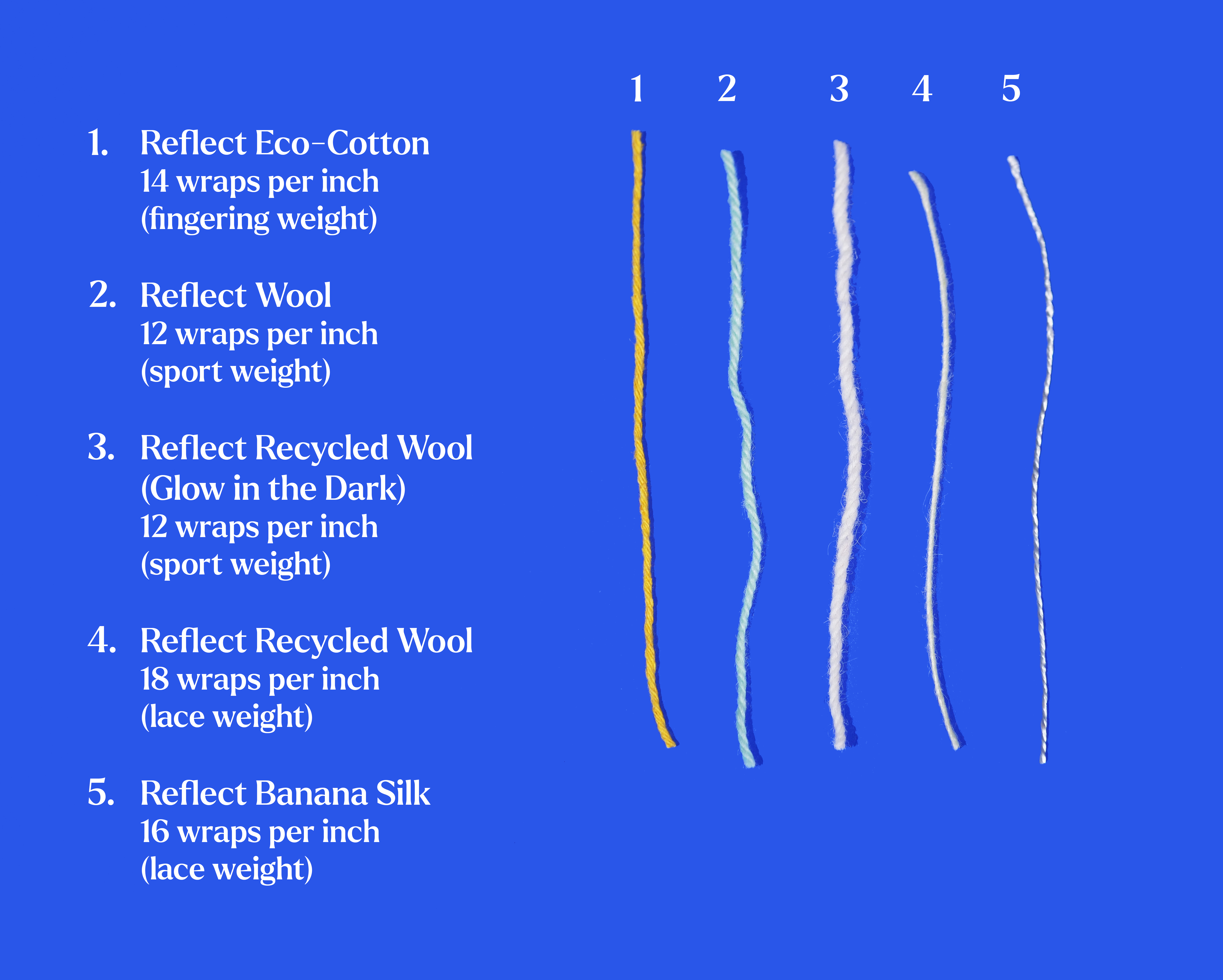
The thickness of your yarn affects the final texture:
A thinner yarn can create a thinner pile and leave the backing cloth showing. To get a fuller, denser pile, most tufters feed two strands of yarn at once. This is what we recommend for Reflect Wool, Eco-cotton and PolyTuft.
Thinner yarns, like Reflect Recycled Wool or Banana Silk, may need three, four or even five strands for a satisfying density. To feed several strands, you can either set up a multi-cone yarn feeder stand or rewind the strands together onto a single cone before tufting. See our suggested yarn quantities here.

Pile still too thin? Turn up the speed dial on your tufting machine, and move the machine along the cloth at a slower pace while you keep tufting. A higher speed creates more tension and tighter spacing between each tuft, which gives you a fuller pile.
High-quality tufting machines can handle a wide variety of yarn types and weights. Still, not every yarn works with every machine:
Experiment! You might try tufting thin strips of fabric, running different yarn textures through your machine at the same time, or tufting with other alternative materials. Just keep your machine type in mind.
If your yarn comes as a ball, skein or hank, rewind it onto a cardboard yarn cone before tufting. A yarn winder makes this easier. Your machine feeds much more smoothly from a cone. Balls tend to bounce and snag, and they create uneven tension that affects your pile quality. Learn more about yarn feeders here.
All of our Reflect Wool yarn is custom dyed for us, so you won't find our colors at other suppliers. Colors are dyed in lots, and some shades are especially hard to match exactly between dye lots. Sky is a particular example. If you're planning a large piece or need to match an earlier project, buy enough of each color from the same lot at once.
Can't find the exact shade you need? We can have custom colors dyed for you, in about 700 colors. Our dyer can match almost anything, including a fabric swatch, another yarn or a Pantone color. Pricing is reasonable, with a 10 lb minimum.
To get started, email support@tufttheworld.com and send a few yards of the yarn, or a sample of the color, you'd like matched. Once a color is approved and ordered, dyeing and delivery usually take about 6–8 weeks.
You can mix any yarns and colors toward these discounts:
These discounts can't be combined with any other offer.
Choosing the right yarn is a game-changer for tufting! Pick the best fiber, weight and texture for your project and you'll create pieces that look stunning and last. Experiment with different yarns and techniques to find what works best for your style. Happy tufting!
See our 32 stock yarn colors, order a swatch card, and learn how custom-dyed yarn works: minimums, pricing, color matching, timing and mothproofing.
One of the most exciting things about tufting is that texture is a design element — not just a material property. Here's how to use it intentionally.
How to transfer a design to tufting cloth: draw freehand, trace, project or pounce, plus tips on mirroring, sizing detail and planning colors.