

Click here to get 15% off your first order.

Translation missing: en.general.country.dropdown_label

  • Log in
  • Cart (0)
  • Checkout
  • Shop 
    • Black Friday Sale
    • Buy our book
    • Kits
    • Tufting Machines
    • Finish your rug
    • Cloth
    • Yarn
    • Frames
    • Merch
    • Gift Cards
    • All products
  • Learn to make 
    • Philadelphia tufting workshops
    • Philadelphia ceramics Workshops
    • Online workshops
    • Private Parties & Lessons
    • Community
    • Our top tufting tips
  • Help Center 
    • All about yarn
    • Compare the Machines
    • Finishing Tufted pieces
    • Getting Started
    • Reflect Rewards
    • Returns and Exchanges
    • Shipping Info
    • Tech Support
    • Tufting Residency FAQ
    • Workshop info
  • About 
    • About us
    • Sustainability
    • Giving
    • Press
    • Blog posts
  • Tuft in Residence
  • Reflect Rewards
  • Custom rugs
  • Translation missing: en.general.country.dropdown_label

  • Shop 
    • Black Friday Sale
    • Buy our book
    • Kits
    • Tufting Machines
    • Finish your rug
    • Cloth
    • Yarn
    • Frames
    • Merch
    • Gift Cards
    • All products
  • Learn to make 
    • Philadelphia tufting workshops
    • Philadelphia ceramics Workshops
    • Online workshops
    • Private Parties & Lessons
    • Community
    • Our top tufting tips
  • Help Center 
    • All about yarn
    • Compare the Machines
    • Finishing Tufted pieces
    • Getting Started
    • Reflect Rewards
    • Returns and Exchanges
    • Shipping Info
    • Tech Support
    • Tufting Residency FAQ
    • Workshop info
  • About 
    • About us
    • Sustainability
    • Giving
    • Press
    • Blog posts
  • Tuft in Residence
  • Reflect Rewards
  • Custom rugs
  • Translation missing: en.general.country.dropdown_label

All about Yarn

How much yarn do I need to tuft a rug?

February 20, 2026

The amount of yarn needed to create a rug depends on the size of your project, how close together your tufted lines are, how tight the tufted strands are, the height of the pile, and the type and thickness of the yarn you're tufting with.  

For example, if you’re feeding two strands of yarn into an AK-I Cut-Pile Machine set to produce a 12 mm pile (about ½ inch), you will use approximately 8 ounces of yarn to tuft a square foot. Since our Reflect yarn comes in 16 ounce (1 lb.) increments, this means, with two cones of yarn on your yarn feeder, you’d be able to tuft about four square feet (or 60 cm x 60 cm) before running out of both cones. 

Thinner yarns might require tufting with three, four, or even five strands at a time in order to create a plush pile. This means either building a yarn feeder that can accommodate a yarn cone for every strand you plan to tuft with, OR rewinding your yarn to wrap multiple strands of yarn around a single cone using a yarn winder. 

When planning your rug and purchasing yarn, it’s always best to have too much of a color than to run out mid-project (and extra yarn is helpful for compensating for mistakes). If you’re tufting with our Reflect Eco-cotton, bear in mind that, because it’s made using available recycled cotton, colors are occasionally discontinued or may vary slightly between orders.


Wool 

Eco-cotton

Recycled Wool

Recycled Wool only (cut-pile) 

–

–

3 cones 

Recycled Wool only (loop-pile) 

–

–

4 cones

Both types of Wool (cut or loop)

1 cone

–

2 cones

Eco/Recycled Wool combo (cut or loop)  

–

1 cone

2 cones 

Wool only (cut or loop)   2 cones

–

–

Eco-cotton only (cut or loop) 

–

2 cones 

–


Continue Reading

What kind of yarn should I tuft with?

February 20, 2026

High-quality tufting machines can handle a wide variety of yarn types and weights, depending on the texture and look you're going for. Some things to keep in mind when choosing a yarn to tuft with: 
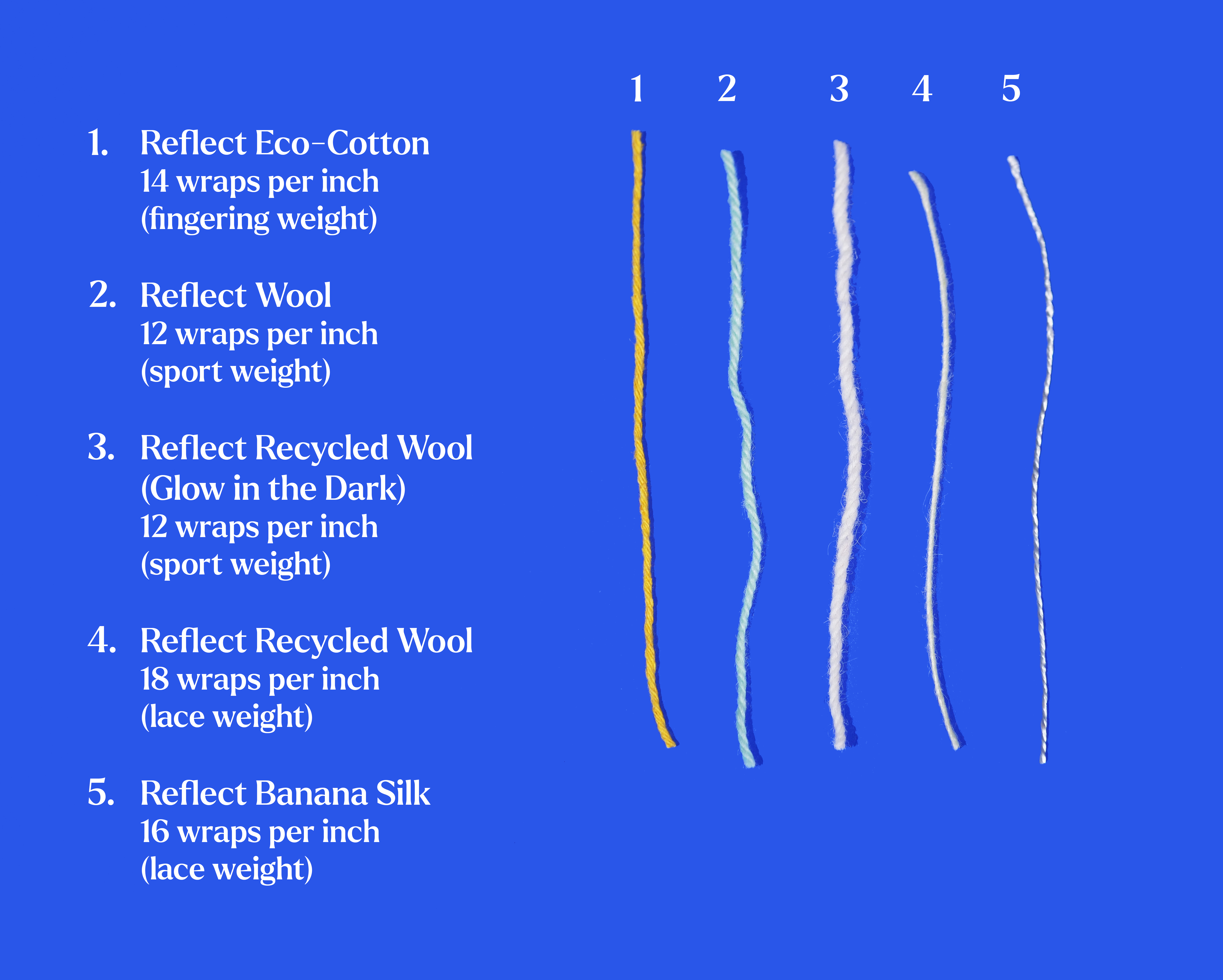
  • Is your tufted piece intended as a wall hanging, or as a floor rug in a high-traffic area? In addition to considering the aesthetic of your piece, when choosing a fiber material be sure to take into account the wear your rug might be exposed to. 
  • Yarn made with natural fibers are best. Wool and cotton yarns are more durable, promise a longer life, and shed less than synthetic-based yarns, like acrylic. Learn more about the properties of Reflect, our own line of natural yarn, below. 
  • If you’re using yarn that comes as a ball, skein, or hank, we suggest rewinding this onto a cardboard yarn cone using a yarn winder in order to easily feed it into your tufting machine. Learn more about yarn feeders here. 
  • Using a thinner yarn can create a thinner pile and expose the backing cloth. We generally recommend threading your machine with two strands of yarn if tufting with Reflect Wool or Eco-cotton, but if your yarn is thin, like Reflect Recycled Wool or Banana Silk, you might thread three or four strands. (Learn more about Reflect Yarns below, and check out our suggested yarn quantities here.)  
  • Turning up the speed dial on the tufting machine can compensate for a too-thin pile, especially if you continue to tuft while moving the machine along the cloth at a slower pace. A higher speed creates more tension and tighter spacing between each tuft, which makes for a fuller pile. 
  • Experiment! You might play with tufting thin strips of fabric, running different yarn textures through your machine simultaneously, or tufting with alternative materials. Just keep in mind that loop-pile machines more easily tolerate alternative fibers than cut-pile machines (since the scissors on cut-pile machines can’t always adequately sever materials other than yarn).
  • Keep in mind that high-pile pneumatic machines, like the AK-III, are only compatible with yarn.

Our in-house Reflect Yarns, available in four sustainable materials and a spectrum of hand-selected colors, are suitable for a wide range of tufted projects. 

Reflect Wool is a sturdy, sustainable yarn made of 100% New Zealand wool and small-batch dyed in the U.S. It’s perfect for use in both cut and loop-pile machines, as well as the KRD-I and the high-pile AK-III. We recommend tufting with two strands at a time. 


Continue Reading


  • Account login
  • Affiliate program
  • Shopping App
  • Shipping
  • Return policy
  • Terms & Conditions
  • Privacy Policy
  • Contact Us
  • Our top tufting tips

© 2026 Tuft the World. Powered by Shopify

  •  
  •  
One or more of the items in your cart is a recurring or deferred purchase. By continuing, I agree to the cancellation policy and authorize you to charge my payment method at the prices, frequency and dates listed on this page until my order is fulfilled or I cancel, if permitted.